Iran vows to fight 'as long as it takes,' threatens Trump with 'elimination'
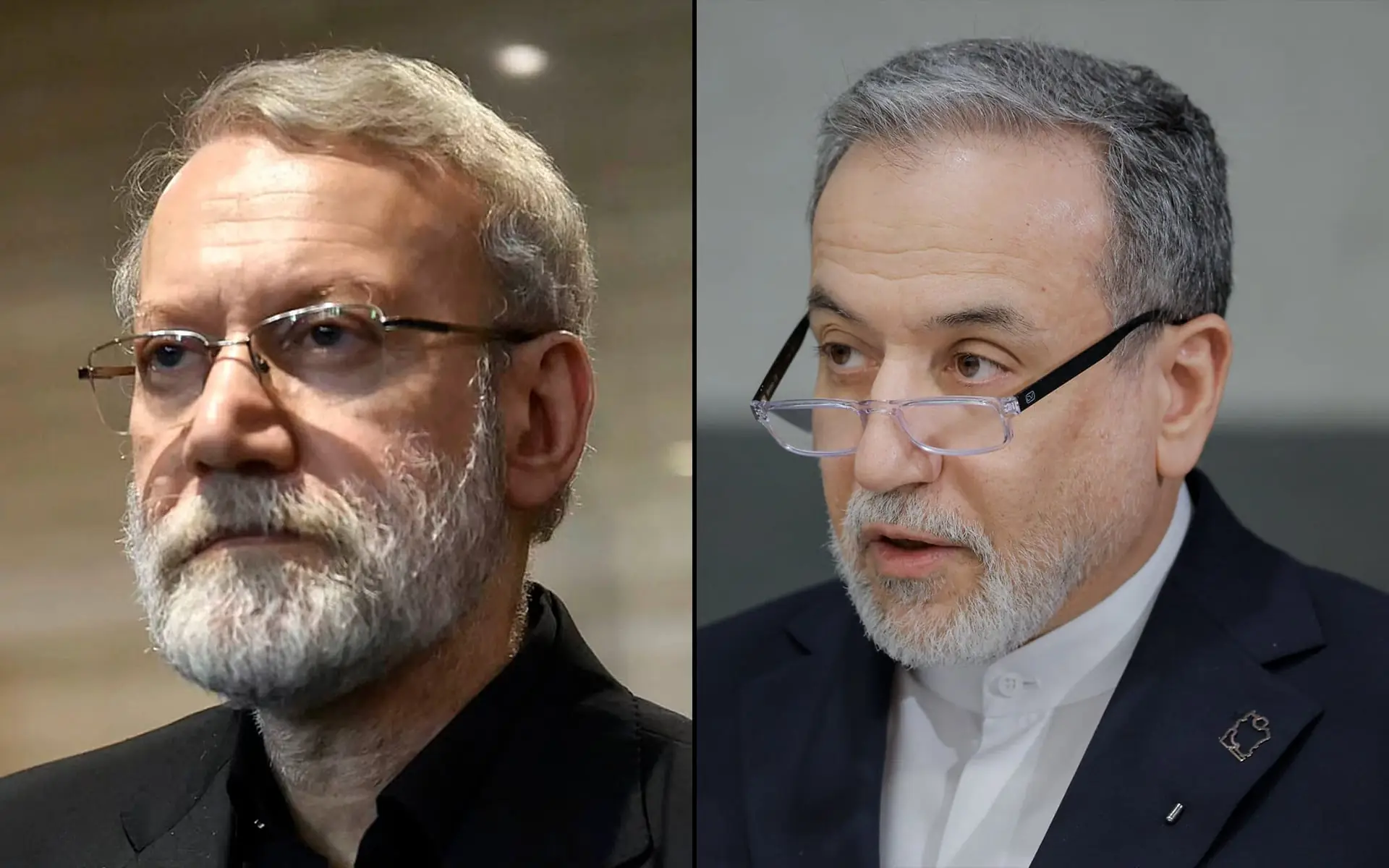
Iran vows to fight “as long as necessary” and threatens Trump with “elimination” IRGC says oil blockade will continue, FM rejects Trump's claim that war could end 'soon' and claims US and Israel failed to meet goals; Tehran continues launching missiles against its neighbors Iran's Foreign Minister Abbas Araghchi said on Tuesday that his country would continue fighting for as long as necessary, casting doubt on US President Donald Trump's insistence the day before that the conflict would end "soon". And the Islamic Republic's security chief, Ali Larijani, dismissed Trump's "empty" threats, insisting that the people of Iran did not fear them. “Not even those greater than you could eliminate the Iranian nation,” Larijani warned Trump in X. “Take care of yourself, lest you be eliminated.” Araghchi's comments, who also ruled out negotiations with Washington, came as Tehran launched a new wave of attacks against US-allied Gulf nations, hours after Trump's assurances of a quick end to the rapidly widening conflict. Trump's comments helped reverse the stock market declines and oil price jumps of the previous day, with markets in Tokyo and Seoul opening strongly and oil prices falling as much as five percent, a day after benchmark crude soared past $100 a barrel. "It's going to be over soon, and if it starts again, they're going to be hit even harder," Trump said at a news conference in Florida on Monday, after telling lawmakers the campaign would be a "short-term excursion." "We've already won in many ways, but not enough," Trump said. He threatened an attack of “incalculable” magnitude if Tehran blocks oil supplies. "We will hit them so hard that it will not be possible for them or anyone who helps them to recover that section of the world, if they do anything." However, in an interview, Araghchi told PBS News: "The shooting continues and we are prepared. We are well prepared to continue attacking them with our missiles for as long as it takes and as long as it takes." And Araghchi effectively ruled out negotiations with Washington, saying Tehran had “a very bitter experience talking to the Americans.” The last war between Israel and Iran in June 2025, which the United States briefly joined to attack Iranian nuclear facilities, also broke out after a round of negotiations with Washington. "I don't think talking more to the Americans is on our agenda," Araghchi said, noting that the United States had talked about progress after three rounds of talks, before launching the campaign's opening strikes on Feb. 28 alongside Israel. He claimed that the United States and Israel had "failed" to bring about regime change in Iran in the early days of the war, and were now "aimed at no goal." Iran's Islamic Revolutionary Guard Corps also responded to Trump, saying they would "determine the end of the war" and reiterated that they would not allow any oil to leave the region if the attacks continued. Iran has effectively prevented oil tankers from using the Strait of Hormuz, the sea route between the Persian Gulf and the Gulf of Oman, the gateway to the Indian Ocean, through which 20% of the world's oil is transported. Attacks on merchant ships near the strait have killed at least seven sailors, according to the International Maritime Organization. In a subsequent Truth Social post, Trump repeated his warning. “If Iran does anything to stop the flow of oil within the Strait of Hormuz, the United States of America will hit it TWENTY TIMES HARDER than they have hit it so far,” he said. Meanwhile, Amin Nasser, chairman and chief executive of Saudi Arabian oil giant Aramco, said oil tankers were being diverted to avoid the Strait of Hormuz, and that its East-West pipeline would reach its maximum capacity of 7 million barrels per day and be brought to the Red Sea port of Yanbu this week. âThe situation in the Strait