Trump gives mixed messages about war's end : NPR
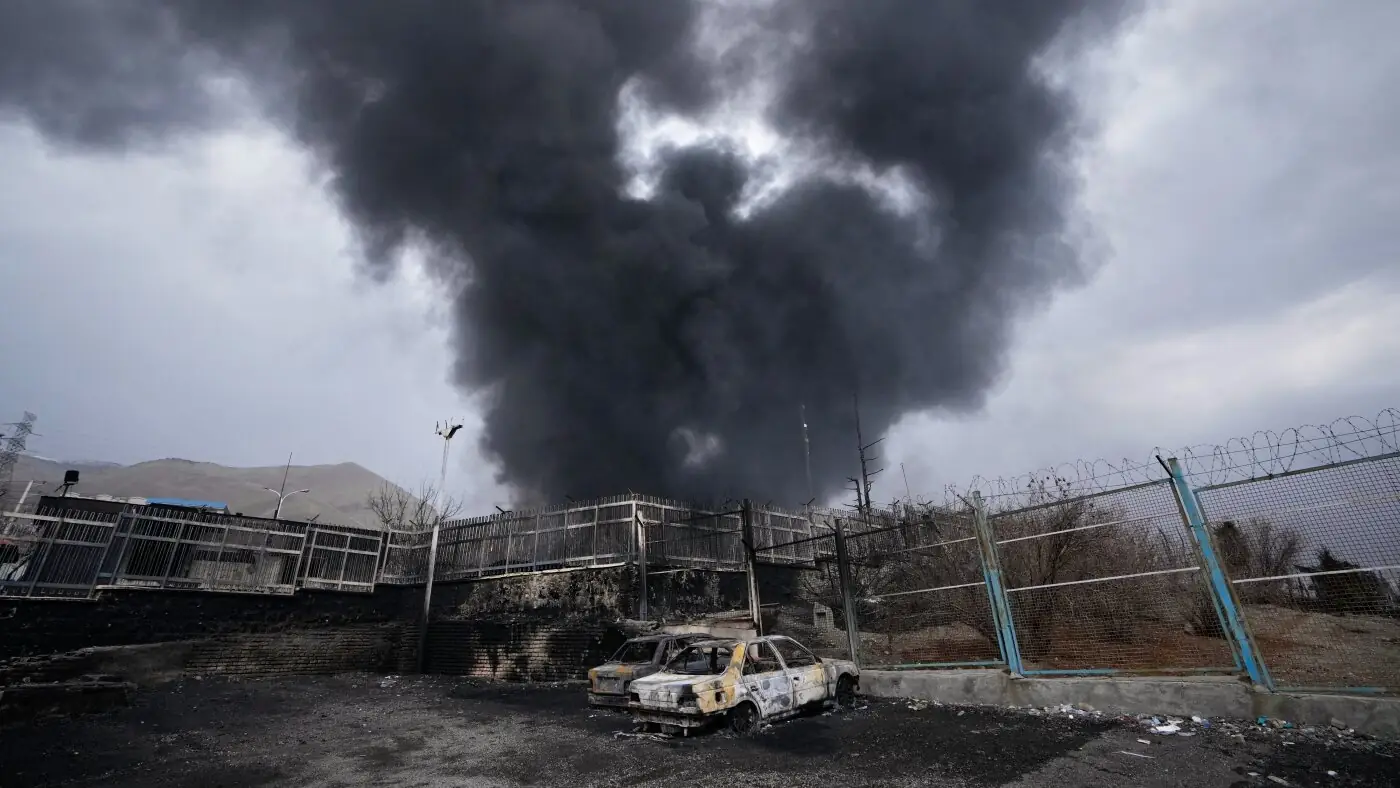
The United States promised its "most intense day of attacks inside Iran" The Trump administration pledged its most intense strikes against Iran on Tuesday, while Israel stepped up its strikes in Lebanon, as the war in the Middle East moves into its 11th day. "Today will once again be our most intense day of strikes inside Iran," Defense Secretary Pete Hegseth said at a news conference, adding that the military was sending the most fighters and bombers so far. It came a day after President Trump touted great success in the war but sent mixed signals about whether the fighting was almost over. Iran launched drones and rockets across the Gulf region on Tuesday, while Israel's military said it carried out attacks against the financial infrastructure of the Iranian-backed Hezbollah organization in Lebanon. More than 1,200 people have died in Iran, 570 in Lebanon and 12 people in Israel, according to figures from Iranian and Lebanese health officials and Israeli authorities. Seven American soldiers have been killed and eight are seriously wounded, the Pentagon says. Here's what you need to know about the latest developments in the conflict. To jump to specific coverage areas, use the links below: Trump on the end of the war | Iran's reaction | Israel attacks Hezbollah | Iranian attacks | Cluster bombs in Israel | Iran-backed militia in Iraq | NATO air defenses in Türkiye | Trump's reaction to Iran's new leader | Iran women's national football team Trump sends mixed signals on when war will end In a phone call with CBS News on Monday, President Trump said, "I think the war is pretty much complete." He said Iran's military capabilities were eliminated. In a subsequent news conference, Trump's first since the war began, he said the United States was "making great strides toward completing our military objective" and warned Iran not to disrupt global energy supplies. But at a separate event with Republican lawmakers in Miami, he took a more open tone. "We have already won in many ways, but not enough," he said. "We move forward more determined than ever to achieve the final victory that ends this long-standing danger once and for all." Trump also stepped up his warnings about the Strait of Hormuz, reacting to a CNN report that Iran had begun laying mines in the passage. NPR has not independently confirmed that report. "If Iran has placed mines in the Strait of Hormuz and we have no reports that they have done so, we want them removed IMMEDIATELY!" he said in a post on Truth Social on Tuesday. "If for some reason mines are laid and not removed immediately, the military consequences for Iran will be at a level never seen before." A few minutes later, he said the United States destroyed 10 "inactive minecraft and/or ships" in the past few hours and more would follow. —Rebecca Rosman Iran says it will decide when war will end In an apparent response to President Trump's comments, Iran's paramilitary Revolutionary Guard Corps (IRGC) said on Tuesday that Iran, not the United States, would have the final say on ending the war. "Iran will determine when the war will end," Revolutionary Guard spokesman Ali Mohammad Naini told Iranian state media. Sardar Shekarchi, spokesman for Iran's military, called Trump "the delusional president." In an interview with PBS Newshour on Monday, Iran's Foreign Minister Abbas Araghchi said he did not believe negotiating with the United States was "back on the table." "We have a very bitter experience talking to Americans," he said. He noted that indirect nuclear talks were taking place last June when the United States attacked Iran, and that negotiations had resumed in February when the United States attacked again. The speaker of the Iranian parliament, Mohammad Bagher Ghalibaf, said on social media: "We are certainly not seeking a ceasefire." Israel attacks Hezbolla more