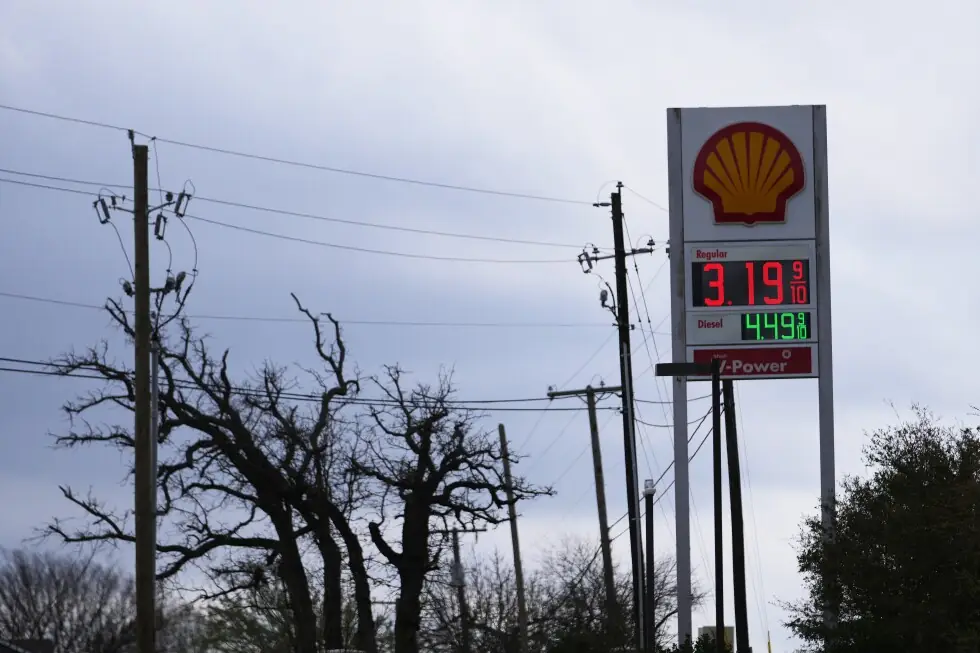
Iran war, surging oil prices affect consumers at the pump and beyond
How the Iran War and Rising Oil Prices Are Affecting Consumers at the Gas Pump and Beyond How the Iran War and Rising Oil Prices Are Affecting Consumers at the Gas Pump and Beyond NEW YORK (AP) — As the price of crude oil surpassed $110 a barrel on Monday, reaching levels not seen since 2022, consumers were feeling the effects of the Iran war and its damage to global energy production. Gasoline prices are rising, and many people will find some of their most immediate economic problems at the pump. But you don't have to drive a car to be affected. Almost all goods (including food) that are bought and sold must travel from where they are produced. Those costs will increase with higher gasoline, diesel and jet fuel prices. And rising oil prices will likely be a major driver of US inflation. As the war continues, some experts say the price of, well, everything could be affected. “The longer this goes on, the more significant the shock will be,” said Gregory Daco, chief economist at consulting firm EY-Parthenon. Here's how the rising cost of oil and gas could affect consumers as the war continues. At the pump: Gasoline prices likely to continue rising Gasoline, diesel, and jet fuel are made from crude oil. As the cost of crude oil rises, so do prices for those widely used products that keep equipment, cars, buses, delivery trucks and planes running. Across the United States, drivers paid an average of $3.48 for a gallon of regular gasoline on Monday, compared to $2.98 before the war began. Prices have increased about 17% since the United States and Israel attacked Iran. Prices vary by state. In California, drivers paid $5.20, 12% more than a week ago. Some of California's refineries have closed in recent years, leaving the huge state dependent on imports of gasoline and other refined products from Asia. By contrast, the average price in Louisiana, which has oil production and refineries, was $3.04. Rising oil prices are likely to drive up gasoline prices even further, and could be felt most significantly in Asia and Europe, which are more dependent on Middle Eastern oil and gas than the United States. The cost of shipping and goods increases along with the price of diesel The price of diesel, which powers 18-wheel trucks, also rose on Monday: to $4.65 a gallon in the United States, a 23% increase since the war began. "I cannot stress what a huge shock this is to the logistics, trucking and (agriculture) sectors," Patrick De Haan, an oil analyst at GasBuddy, wrote on Monday. The effective closure of the Strait of Hormuz, the waterway that carries a fifth of the world's crude oil and liquefied natural gas, has already caused problems for the shipping industry. Rapidly rising oil and gas prices will increase the burden. Fuel prices account for 50% to 60% of the total operating cost of shipping goods by ship, according to Patrick Penfield, a professor of supply chain practice at Syracuse University, so higher fuel prices have a huge effect on the industry. "When fuel prices start going up, everything starts to slow down," Penfield said. "So your ships slow down, your trucks slow down. People are less likely to ship things by air. And it really causes a drag on the economy when the price of fuel goes up." Fuel surcharges will also increase as shipping companies seek to pass higher costs on to their customers, ultimately making products more expensive. Household energy bills will likely increase and items made from plastic could cost more Heating your home and cooking food with natural gas is also likely to cost more as the war progresses. Europe's benchmark natural gas has risen 75% since the war began, according to data from the Intercontinental Exchange. That could also affect the cost of products made from natural gas, such as petrochemical feedstock. Yo