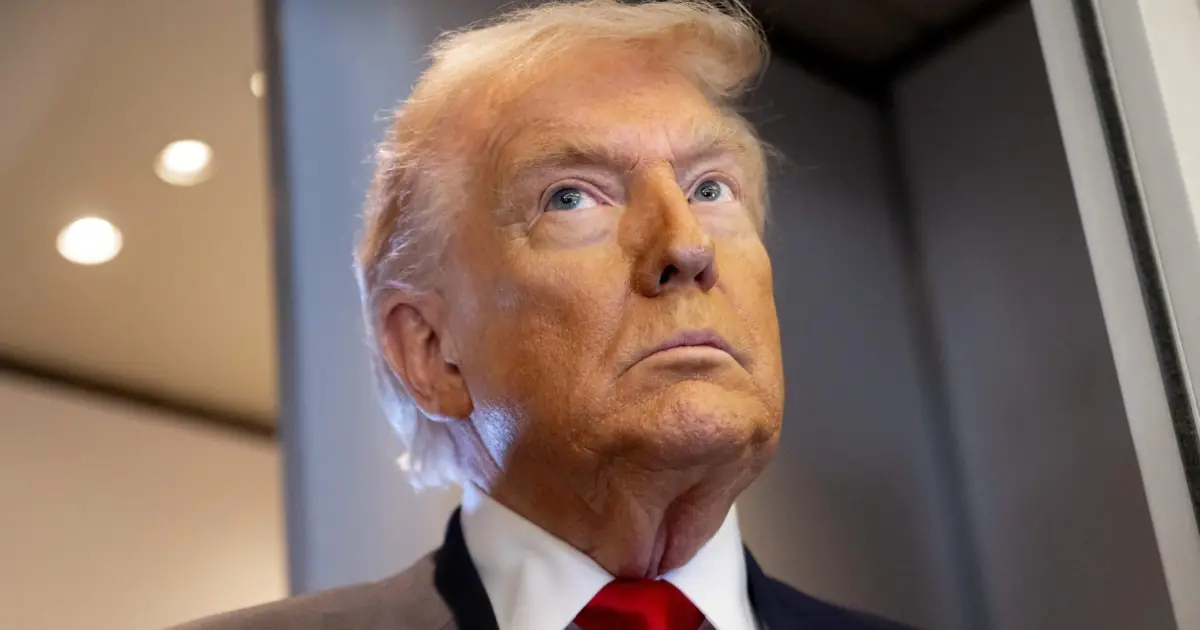
Senate Republicans splinter over SAVE America Act's path as Trump calls for more revisions
WASHINGTON – The outlook for President Donald Trump's SAVE America Act grew murkier Monday as divisions deepened among Senate Republicans over how to pass it and whether it can be overcome Democratic opposition. Some say they are convinced that a “talking filibuster” under current rules could lead to passage of the sweeping election reform bill, even if it hasn't worked before. Another Republican senator proposed a different path with less support. And the Senate's top Republican emphasized that the path is unclear, as the 60-vote rule may be too difficult to overcome. "Having studied it and researched it pretty thoroughly, they have to show me how, in the end, it prevails and it succeeds. Because I think what's been promised is that, in the end, it would get a result. And it's very difficult for me to see that based on actual past experiences," Senate Majority Leader John Thune, R-South Dakota, told reporters. "We can't find a law in history that has been passed that way." Meanwhile, Trump spoke to House Republicans in Florida and called for new provisions to be added to the bill (which currently includes new voter ID and proof of citizenship requirements, along with voter screening through a Department of Homeland Security database) to largely ban mail-in voting, plus unrelated restrictions on transgender athletes and gender-affirming treatment for minors. He said he spoke with Sen. Mike Lee, R-Utah, the bill's sponsor, about possible changes. "These are called 'Trump's Best'. We should also add something to this bill. And so what I asked Mike to do is draw a new one with these few things added and let's go for the gold. Let's not just get one, like voter ID," Trump said, predicting that if the bill passes, Democrats wouldn't win an election for half a century. "This is priority number one." Lee has been a vocal advocate of the “talking filibuster” and has gathered an online army of conservative activists to try to pressure the Senate to try it. “I'm willing to try it, too,” said Sen. Josh Hawley, R-Mo. "I know the majority leader is not enthusiastic about it. I would have to manage the floor, but I'm absolutely willing to give it a try." "I know it would be cumbersome," Hawley added. When asked if pressure to perform was increasing, Thune said "a lot of it" comes from the "paid influence ecosystem." Sen. Mike Rounds, R-South Dakota, who is running for re-election this year with Trump's endorsement, said the first procedural vote on the bill will show where each senator stands. "I think there's real value in letting the American people know who supports them and who doesn't," Rounds said Monday. "After that, I think talking about the filibuster is a lot more challenging than some people think." Meanwhile, Sen. John Kennedy, R-La., suggested an alternative option: use the filibuster-proof “reconciliation” process to eliminate Democrats and pass the SAVE America Act. That path, however, is limited to taxes and spending, as previous election bills have been declared invalid below the simple majority threshold. “When I raise that question, many say, well, I'll never survive a Byrd bath and the Budget Control Act,” Kennedy said, referring to the limitations of the budget process. “It all depends on the parliamentarian and her team, and the way to achieve something through a Byrd bath is to do your homework, do your research and look for precedents.” It's a challenging puzzle for Thune, one that could lead to failure on one of Trump's top priorities. He faces a daily torrent of pressure from conservatives on social media, many of whom are convinced that the “talking filibuster” is viable if Republicans try it. And you're trying to manage your conference. "I got a text message from Senator Thune last night," Kennedy told reporters, "sa